
A comprehensive look at how Manual Induction Foil Sealing Machines work, their key features and benefits, and why R Technologies remains the go-to Manual Induction Sealing Machine Manufacturer in India for over two decades.
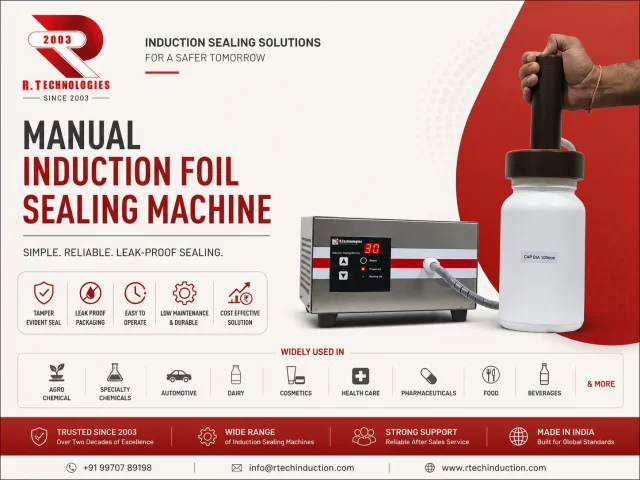 In today’s competitive packaging landscape, product integrity and consumer trust are everything. Whether it’s a bottle of pharmaceutical syrup or a jar of premium skincare cream, the seal on a container is often the first line of defense against contamination, tampering, and spoilage. This is precisely where a Manual Induction Foil Sealing Machine steps in as an indispensable tool for manufacturers and packagers alike.
Induction sealing technology has transformed how industries across India and the world ensure product safety. Among the pioneers of this technology in India is R Technologies — a company established in 2003 that has dedicated over two decades to designing, manufacturing, and supplying high-performance induction sealing solutions. From small-scale operations to large industrial set-ups, R Technologies has become synonymous with precision, reliability, and innovation in the foil sealing domain.
This blog article explores everything you need to know about the Manual Induction Foil Sealing Machine — how it works, its standout features, its diverse applications, and why R Technologies is the preferred Manual Induction Sealing Machine Manufacturer in India.
What is a Manual Induction Foil Sealing Machine?
A Manual Induction Foil Sealing Machine — also commonly referred to as a Cap Sealing Machine, Foil Sealing Machine, or Induction Cap Sealer — is a portable, hand-operated device used to create hermetic (airtight) seals on containers using electromagnetic induction technology.
Unlike automated conveyor-based sealing systems, the manual variant is designed for flexibility. The operator simply places the sealing head over a capped bottle or container, and within seconds, the foil liner inside the cap is bonded permanently to the container’s mouth — without any direct contact between the machine and the container.
These machines are widely used for sealing plastic bottles, glass jars, aluminum containers, and HDPE containers across a variety of industries where product safety, shelf life extension, and tamper-evidence are critical requirements.
Working Principle
Understanding how a Foil Sealing Machine works helps appreciate the engineering elegance behind the process. The working principle of induction sealing involves three core physical phenomena: electromagnetic induction, eddy currents, and heat conduction.
- Container Preparation:The container is filled with the product and capped with a closure that has a foil liner (induction seal liner) placed inside it. This liner typically consists of multiple layers — a backing layer, a wax layer, an aluminum foil layer, and a polymer sealant film.
- Electromagnetic Field Generation:When the sealing head of the manual induction machine is brought close to (or placed over) the capped container, the machine generates a high-frequency electromagnetic field.
- Eddy Current Induction:This electromagnetic field penetrates the non-metallic cap and induces eddy currents in the aluminum foil layer of the liner. These rapidly alternating currents cause resistive heating in the foil.
- Heat Conduction & Bonding:The heat generated in the aluminum foil melts the wax layer (which is absorbed by the backing layer) and simultaneously melts the polymer sealant film on the underside of the foil, bonding it permanently to the rim of the container.
- Seal Formation:Upon removing the sealing head, the melted polymer cools rapidly and forms a strong, tamper-evident, hermetic seal. The backing layer and wax remain in the cap, while the foil disc stays bonded to the bottle mouth.
Non-Contact Technology: The most remarkable aspect of induction sealing is that the machine never physically touches the product or the container. The sealing is achieved purely through the electromagnetic field — making it hygienic, fast, and consistent.
Key Features
R Technologies’ Manual Induction Foil Sealing Machines are engineered to deliver consistent, reliable performance across diverse packaging environments. Here are the standout features:
Handheld & Portable Design
Compact, lightweight form factor allows operators to move freely across the production floor with ease.
Adjustable Power Settings
Variable power control ensures optimal sealing for different foil thicknesses and container materials.
Tamper-Evident Sealing
Produces permanent, tamper-proof seals that are immediately visible if compromised — building consumer confidence.
Wide Container Compatibility
Works with plastic, glass, HDPE, and aluminum containers of varying neck diameters and shapes.
Rapid Sealing Speed
Seals containers in 1–3 seconds per unit, making it highly efficient for small to medium production runs.
Overheating Protection
Built-in thermal protection circuits prevent damage to the machine and ensure long operational life.
Standard Power Supply
Operates on standard 220V/50Hz power supply — no specialized electrical infrastructure required.
Low Maintenance
Robust construction with minimal moving parts translates to low downtime and easy serviceability.
Multiple Head Sizes
Available with interchangeable sealing heads to accommodate different cap sizes from 20mm to 120mm.
Benefits of Using a Manual Induction Foil Sealing Machine
Investing in a quality Induction Cap Sealing Machine from R Technologies offers a host of tangible benefits for your business and your end consumers:
For Product Manufacturers
- Extended Shelf Life: Airtight induction seals prevent oxidation, moisture ingress, and microbial contamination — significantly extending product shelf life without preservatives.
- Reduced Product Loss: Hermetic sealing eliminates leakage during transport and storage, cutting down on waste and financial losses.
- Compliance Ready: Tamper-evident seals help manufacturers comply with packaging regulations in pharmaceutical, food, and chemical sectors.
- Cost-Effective Investment: Manual induction sealers offer a low-cost entry into professional induction sealing with minimal infrastructure requirements.
- Versatility: A single machine can handle a wide range of container types, sizes, and cap styles — ideal for manufacturers with diverse product lines.
- No Heat Damage to Product: Since heat is generated only in the foil liner (not the container or product), there is zero risk of thermal damage to heat-sensitive formulations.
For End Consumers
- Clear visual indication that the product has not been tampered with
- Confidence in product freshness and purity at the time of purchase
- Protection against adulteration and counterfeiting
Industry Applications
The versatility of R Technologies’ Foil Sealing Machine makes it the ideal cap sealing solution across a wide spectrum of industries. Below are the key sectors that rely on manual induction sealing technology:
Pharmaceuticals & Healthcare
In the pharmaceutical sector, product integrity is non-negotiable. Manual induction sealers are used to seal bottles containing tablets, capsules, syrups, and liquid medicines. The tamper-evident foil seal assures patients and healthcare providers that the product has not been adulterated — a regulatory requirement in many markets including India (as per CDSCO guidelines) and internationally.
Food & Beverages
From cooking oils and spices to sauces, honey, and nutritional supplements, food-grade induction sealing preserves freshness, prevents leakage, and enhances consumer trust. The airtight seal slows oxidation and rancidity, keeping food products fresh for longer without chemical preservatives.
Cosmetics & Personal Care
Creams, lotions, serums, shampoos, and other cosmetic products require reliable sealing to prevent evaporation of volatile ingredients and contamination. A professional cap sealing machine ensures the product the customer opens at home is exactly as it left the factory.
Agrochemicals & Specialty Chemicals
Pesticides, herbicides, fertilizers, and industrial chemicals demand robust sealing to prevent leakage of hazardous materials during transport and storage. Induction seals provide a reliable barrier that stands up to the rigors of the chemical supply chain — protecting handlers, consumers, and the environment.
Automotive
Engine oils, lubricants, coolants, and automotive fluids are commonly sold in induction-sealed bottles. The foil seal assures end users and fleet operators that the product is pure and uncontaminated — critical in an industry where product adulteration can cause serious engine damage.
Dairy Products
Dairy companies use induction sealing for yogurt, flavored milk, ghee, and other dairy products to extend refrigerated and ambient shelf life, prevent spillage, and meet food safety standards.
Why Choose R Technologies?
When it comes to selecting a Manual Induction Sealing Machine Manufacturer in India, R Technologies stands apart through a combination of experience, quality, and customer-centricity. Here’s what sets them apart:
20+ Years of Expertise
Founded in 2003, R Technologies brings over two decades of focused experience in induction sealing technology.
ISO-Grade Manufacturing
Machines are built using premium-grade components with stringent quality control at every stage of production.
Made in India
Proudly Indian — supporting the Make in India initiative while delivering world-class packaging machinery.
Pan-India Customer Base
Thousands of satisfied clients across pharmaceutical, chemical, food, and cosmetics sectors across India.
After-Sales Support
Dedicated service team ensures prompt technical assistance, spare parts availability, and preventive maintenance.
Complete Sealing Solutions
Offers a full range from handheld manual sealers to semi-automatic and fully automatic conveyor sealing systems.
R Technologies also provides customized sealing solutions tailored to specific production environments, bottle neck sizes, and throughput requirements — ensuring every client gets a machine that fits their exact needs, not just a generic off-the-shelf product.
Their team of trained engineers collaborates closely with clients during the installation and commissioning phase, offering hands-on training to operators and maintenance staff — minimizing the learning curve and maximizing machine uptime right from day one.